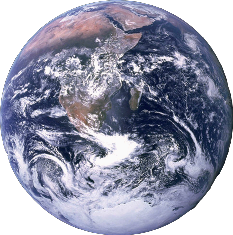
For more than six days Earth has been our friend in the lunar skies. That fragile piece of blue with its ancient rafts of life will continue to be man's home as he journeys ever farther in the solar system. Apollo 17, December 14, 1972
Showing posts with label waste. Show all posts

Tuesday, May 27, 2008

9. In Praise of Plastics

"T'ain't What they Do (It's the Way That You Dispose of them)".......

This very poor hark back to the words of the band, Bananarama, from the 1980’s introduces us to the opportunity as well as the problem with plastics. Plastics generally get a bad press - but happily not in a recent article in the Financial Times by Sam Knight on 26/4/08. I’ve looked closely at what he said, which was very informative indeed, and taken a little of it for use in this post.

Plastics are designed to be disposable....
If you buy something expensive you generally expect it to endure and work for a long time -  it consequently is rarely made of plastics. If a plastic item goes wrong you either decide to ‘make do and mend’ or eventually replace it. Objects made from plastics are generally cheaper and will deteriorate over time (this is called ‘ageing’), but they normally do outlast the use we put them to. They are then generally disposed of - herein lies the difficulty. We are hopeless at coping with plastic waste. We have not applied anything like the same creativity we did in the design, to what we should do with them once they’re ready to be thrown away.

Glass isn’t designed to be disposable, but it is.....
The position is made even more nonsensical by our predilection for glass (see post 8). Glass is extremely heavy and requires a lot of energy to move it around the globe. In the UK plastics represent 53% of the packaging we use, but only 20% of the weight of packaging we use, transport and dispose of. Glass, on the other hand, represents 10% of the packaging we use but, at 20% of the weight, is equally burdensome on transport and disposal. Simplistically glass is five times less efficient, gram for gram, than plastics as a packaging material. Australian winemakers - the real innovators in the wine business - have worked this one out, and are now using PET bottles to export wine to the UK, as it's more economical in energy terms.

In praise of plastics again....
In the FT article the Packaging Foundation claim that ‘modern life’, for better or worse, is only possible because of the highly creative design and use of plastics - they describe it as the ‘forgotten infrastructure’. Some interesting illustrations of its wider effect are:

  • Plastics packaging has enabled us to source and distribute foods from many parts of the world and keep it in good condition, thus defying the local seasons and giving enormous variety to our diet. So for example, thanks to laminated plastics packaging, fruit juice from Brazil can be kept palatable for nine months in a Tetrapak. It also enables us to buy pre-prepared meals which can be made presentable and edible in just a few minutes.

  • In India, which uses much less packaging, 50% of the food in the supply chain is lost, compared to the UK’s complex supply chains which lose only 3%. All this good food going to waste is bad enough but the energy to distribute it needlessly must also be put into the emissions equation.

  • The film wrapped cucumber is taken as an icon of needless packaging. The Cucumber Growers Association argue that the film, weighing in at 1.5g per item, doubles the shelf life to two weeks, and makes the product more durable in transit. So for a very small investment in plastics film we reduce waste and all its additional associated disposal and distribution costs.

Sensible disposal of plastics....
Given then that we have invented a brilliant way of reducing waste throughout the pre-sale supply chain, but acknowledging that it does cause a challenge for us to dispose of, let’s look at this from first principles. The disposal problem could be very simple if we return to the waste hierarchy:
Reduce - yes, that is a light possibility, although plastics manufacture only uses 2% of the crude oil produced. If we are talking about plastics packaging, there are good reasons for continuing to use it.
Reuse - there is little we can do to reuse plastics because of their tendency to deteriorate. Who wants a yellowing, slightly cracked PC monitor?
Recycle - this is generally very difficult because there are so many different types of plastic which are difficult to differentiate and then separate, or are tightly juxtaposed in laminates. There are over 20 different types with very specific properties. When mixed up they lose their specific functionality.
Energy recovery - has definite possibilities. At high temperatures many plastics will burn reasonably cleanly but they will produce CO2, from the carbon in them. As that carbon is derived from crude oil extracted from the subterranean sphere (see post 5), it is adding to the CO2 concentration in the atmosphere and thereby contributing to climate change.
Landfill - or disposal at sea could look like the most likely option. When this occurs, there is very little nature can do with plastics, unlike vegetable waste, for example. It just remains as unbiodegradeable rubbish - unsightly and offensive on the eye. In the sea it breaks down into smaller and smaller pieces as part of its natural ageing process and due to the violent movement of the sea’s surface. Eventually it looks like plankton and is ingested by marine life, where it has no nutritional value. The presence of non-biodegradable plastics in the sea has also caused quite a stir in environmental circles with the reporting of large quantities of plastics ending up in the Sub Polar North Pacific Gyre - a natural marine vortex. Not only is this unsightly and disrespectful to other creatures in the biosphere it is also a significant waste of an opportunity. These plastics have plenty of energy and chemical structure left in them - it is simply a matter of using these productively without producing greenhouse gases. We haven’t found a viable way of doing that yet.

‘Well-fill’....
This landfill conundrum is still an opportunity. Think of landfill as ‘well-fill’, or ‘mine-fill’. Let us fluidise or compress this stuff and put it away, fully acknowledged and recorded, deep down beyond any degradation agents such as light or microbes, or dissemination forces such as the wind or water. Here it can remain, immobile and inert, until perhaps 30 years when we have had time to invent the technology to make prudent use of its energy and chemical structure. When the fossil fuels begin to run out we will have a store of low grade hydrocarbon material ready to be pumped up again. There is a great symmetry to it: we extract hydrocarbon, turn it into something useful which does its job, and then return the hydrocarbon whence it came, for the next generation if they choose to use it.

Making it happen....
Assuming that we have got the design right for the post sale supply chain and then built it, we will need to get those people who are earnestly recycling in one way to do so in another. This is not easy but is an inevitable price for making an ill considered false start. But let’s face up to it, agree on the mistake and get on with it straightforwardly. There is no time to lose. The plastics wine bottle is a good example, like the cucumber, of the received wisdom being wrong. As a result populist governments enact legislation which is misguided and influence populations and major corporations like supermarkets to behave in totally counter-productive ways - this is perverse in the extreme, and extremely serious as it is leading well-meaning collective human effort in the wrong direction. The FT quotes one of the Prime Minister’s sustainability commissioners, Tim Lang, as describing the situation as a ‘mess’.

Plastics, particularly in packaging are thought of as an environmental threat - the iconic disposable carrier bag - typifies this:

  • What for one person is a non-biodegradable blight on the landscape, for which legislation on their issue by supermarkets is being considered,

  • For another, it is a brilliant bit of design arriving at a extremely low cost way to help customers get their purchases home in one piece and avoid waste from damage, and

  • For another, like me, it is a piece of material with fossil fuel carbon sequestered away within it, which could be taken out of the biosphere.

The earlier ‘minefill’ suggestion satisfies all three points of view. Perhaps if this were viable, then the post sale supply chain needs designing with similar ingenuity as the pre-sale one. Finally people need to understand it and ‘buy into’ it, as they have done, for other domestic and commercial waste streams.

Addressing a nagging doubt....
In their praise of plastics, the FT quoted the modern lifestyle. Plastics are serving our desire for the modern lifestyle admirably and if we learn to dispose of them sensibly, what’s the problem? However, what about this modern lifestyle that we feel impelled to adopt - is it providing satisfaction and fulfilment? If we honestly ask the following questions of ourselves, what does it reveal?

  • Are we really finding happiness living this modern style of life?

  • Does happiness increase with increasing consumption?

  • If so, if we push even harder will it get better?

  • Does it matter if we deprive others elsewhere in our quest for greater happiness?

  • What do others think of our enormous propensity to consume?

Amongst the people of around my age (53), I detect quite a bit of ambiguity and enquiry. On the one hand, as we have advanced in age, our careers may have made us richer, we probably possess more than our parents and can, for example, afford several foreign holidays, but on the other hand we still hark back to a less complicated, slower life, in our childhood. I, for one, am coming to see climate change as an alert, a symptom of a profound problem about ourselves. We seem not to see the big picture - where this might all rather end up. Perhaps it’s not plastics, nor cheap air travel, nor my next mobile phone that’s the actual problem, but it’s our unthinking hunger for them which is going unbridled.

As in many of these posts, when you step far enough back to see the big picture, the view changes and the solutions can seem more profound and lasting. My next post will consider some excellent and optimistic thinking from Adair Turner in the book, ‘Do Good Lives Have to Cost the Earth?’.

Read more!

Sunday, April 27, 2008

8. Our Waste

Out of order.......
I've been compelled to write my next post at a different point in the intended order, both because of recent news articles and also in response to the virtual dialogue following post 7.

It is not as fully researched as I would like, so please pitch in, as always, if you see flaws.

Waste is an inevitable consequence of life. Before the industrial revolution waste was mainly bio waste and was manageable although not well managed. In other words, biologically produced waste materials could be handled by biological processes, and give or take a few urban excesses were kept in balance. Much of today's highly organised effluent processing relies upon these self same processes in sewage farms, septic tanks and digesters.

Today's challenges are very much greater for the two reasons mentioned in previous posts.
Firstly the level of activity and consumption, populations in the West, and increasingly the East, feel the need for, is increasing the level of waste they also produce. This results in, for example, at the UK domestic level in;

  • less time to cook and therefore the need for pre-prepared, pre-packed, near instant meals,

  • the need to be slaves to fashion and throw out perfectly functional garments or gadgets within months of purchasing them?

Secondly the global population is higher than ever before and continuing to rise very fast at 200,000 per day. These incremental new populations aspire to the needs of the established cultures and add to the demand for goods and services and their associated waste.

Waste
I am going to avoid the cliché of how many earths we would need to manage the waste stream of the world if the world consumed at the same rate as the EU?, but it is more than one. The developed world is profligate and its current habits are not sustainable. However from my blog’s perspective I’m concerned about what this is doing to the climate. The carbon cycle keeps the consideration very simple. If we consume carbon from the biosphere and process it into useful things and/or waste within the biosphere then it is neutral, as it has always been. If we dig up subterranean carbon and introduce that to the biosphere then every atom is a net increase to the biosphere. Every time each atom cycles through the carbon cycle and spends time as a greenhouse gas it is making the climate warmer. So, given the fact that we are currently still extracting carbon from the subterranean layer what is the wisest thing to do? The waste hierarchy helps, as it shows where the most benefit comes from. If we can have an effect at level 1, then it has obviates the need for work at the lower levels. There is also an article in the Financial Times (26/04/08), which placed an acute eye upon the plastics and packaging industry, and shows how they can be considered at the various parts of the hierarchy. There will be an analysis of the article in the context of the hierarchy below in my next major post. The waste hierarchy is becoming more complex as novel technologies blur the edges of neighbouring levels, but it is still a useful way of looking at waste.


The Waste Hierarchy
1. Reduction.
is probably the most fertile ground, and yet is the most difficult as waste reduction returns us to the question of what we really want and involves changing habits which are in themselves on a fast path towards ever greater excess (see post 4). For example, my children’s generation can easily become heavily influenced by ‘cheap chic’ fashion from shops like Primark and H&M which turn over ranges and ‘seasons’ remarkably rapidly. They may only wear a garment once before disposing of it. At best that garment gets reused in the UK and eventually through a ‘clothing recycling bank’ gets sent to the third world, probably whence it came, which is an irony in itself. For baby-boomers, who were brought up with post war rationing still having an effect, this is very difficult to understand and accept. The current western life is full of desire and the need for instant satisfaction – “I want it, and I want it now. If I’d wanted it yesterday, I would have told you yesterday….” Where does moderation, temperance, ‘make do and mend’ and self-sacrifice fit into this? In the words of Harold MacMillan in 1957, who was urging for restraint and common sense, “most of our people have never had it so good”. Is this not today’s problem too but magnified by another 51 years of increasing wealth, expectation and consumption? The material world has expanded enormously and made ‘once in a lifetime’ type purchases, mere commodities which get consumed and disposed of in rapid succession. This concept of succession will be referred to again in a later post. All this is fired by a national need for increased economic growth. In the book ‘Do good lives have to cost the earth?’ Adair Turner puts a strong case for a change of thinking here. Again a later post will look at my take on his very interesting thoughts. If we can’t manage to reduce our need for goods then we must drop down to reuse where the overall gain is less but the ease of implementation might be easier.

2. Reuse.
has great virtue and many of us from the UK babyboomer generation still have an instinct to use it, if we can. The clearest example of it was the pinta - a glass one pint bottle sealed with an aluminium lid containing one pint of fresh milk delivered to our doorstep from an electrically powered milk float. An unwritten rule of the dairy was that each customer left their 'empties', washed out emptied bottles, ready for collection by the milkman at the same time as he delivered. So in theory if he started his run with 1000 'pintas' he would return with 1000 'empties'. The dairies would then clean and sterilise the bottles and reuse them to distribute more pintas to peoples doorsteps, and so the cycle continued. I'm not sure what the attrition rate of bottles was, but despite there being no financial benefit to make the bottles available for reuse, most did get preserved and recycled out of a sense of duty and a desire to keep the process economical.
This process is reflected in northern Continental Europe where many carbonated drinks are bought in strong reusable bottles for which there is a significant charge made. There are both financial and legal incentives to bring the bottles back to a shop for eventual return to the bottler to reuse.
No doubt there are arguments to suggest that today's milk supply chain allows a far better, long lived product to be sold and so less milk is wasted and the consequent carbon footprint is less, and these may well be right. However it is unarguable that if we still had the pinta delivered in glass bottles it would seem ludicrous for the perfectly serviceable empties to be smashed into pieces in a bottle bank. At best, this is what we in the UK are doing with our glass containers, whether it is wine and beer bottles or jam jars. In other words we are needlessly dropping down a level in the waste hierarchy and 'recycling' glass which, with enough imagination, could be reused. A consequence of moving our waste down the waste hierarchy is that it becomes less useful, less valuable and more likely to be dumped at level 6 in the hierarchy.

3. Recycling and composting
The term for broken glass is cullet. It has virtually no utility at all except perhaps as deterrent to intruders when embedded in a cement topping to a wall. In order for it to be recycled to make it useful it has to be worked on. If ground down, it apparently can be mixed with sand, which has does a have an absurd irony to it, if you think about it. Ground glass can also be dispersed within other building materials to provide some functional advantage but this is all pretty low grade in comparison to the shiny, fully serviceable receptacle from which it was derived. To make useful glass receptacles again, the cullet has to be sorted by colour, have impurities removed, and then heated to very high temperatures to melt and remould it. This does seem absurd too. I have read at http://www.glasscullet.com/ that part of the rationale for recycling cullet (level 3) to make glass containers is that it requires less energy than producing new glass. I don't disagree with that narrow view, but is that the only alternative? Why not preserve that glass container and reuse it (level 2), and only resort to level 3 when the receptacle has lost its utility?
Returning to the pinta. Many a jam jar was 'reused' (level 2) as a receptacle to collect the aluminium caps to the milk bottles which were then ultimately recycled (level 3) back into the aluminium supply chain. The motivation for this purely financial - it was a fund-rasier for our school.
Composting, in my opinion, has been elevated above its station. Yes, it produces a useful natural fertiliser and mulch, but it also produces CO2 and some methane, which contribute to greenhouse gas emissions for relatively little gain. Energy recovery can be a better option for the biosphere if the vegetable waste does not have to be transported too far.

4. Energy recovery
This is a posh way of saying incinerate rubbish and use the heat it produces in some way. Starting at the smallest scale first: garden waste often ends up on a bonfire where it is partially burned to produce ash, half burnt wood, lots of smoke, water, CO2 and some clear space where the bonfire pile was. On an individual scale this does little harm but a community's waste disposed of in this way does a lot of harm and, more importantly for this analysis, misses a major opportunity to recover the energy provided to the biosphere by photosynthesis in the plant life being burned. If the gardener were to put a kettle on the bonfire he might eventually boil enough water to make a thirst quenching cup of tea, which would have recovered a small part of the energy locked up in the garden rubbish and avoided him boiling an electric kettle.
The real problem however is that the bonfire produces low grade heat which is very difficult to harness. There was a special design of mini-stove marketed that could recover the energy from one newspaper which would be sufficient to boil that kettle in a few minutes. This combination of good design matched with excellently prepared fuel was best described to me by an expert supplier of logs for use in Swedish wood-burning stoves. If the stove was stoked with logs which had been split and allowed to dry out completely the natural temperature of combustion was so high that they were self cleaning and the combustion so complete that a smoke flue was not required. This 'clean burning' recovers the most amount of heat possible and makes the most use of the carbon within the biomass burned. If you return to post 7, you will see that this is the near perfect means for energy recovery of biomass. It is this matching of the fuel to the method of incineration which is so importannt.
Unfortunately the incineration and energy recovery of the general waste stream is not so easy - the waste is far less well defined and contains materials which do not burn cleanly. Much is made of the threat posed by dioxins which are a very harmful byproduct, but recent technology advances are ingeniously minimising this.

5. Landfill with energy
Taking most of the general waste stream and burying it in the ground is unsightly and space intensive and is an obvious sign of man polluting the biosphere and makes landfill look 'unenvironmental'. Nonetheless microbial and chemical processes within the rubbish do eventually break much of the waste down into simpler products which eventually settle and produce a base upon which topsoil can be placed. For example a local landfill site close to us is now a park with playing fields.
From an energy point of view however, the heat released from breaking down the waste (the warmth naturally produced in a compost heap for example) is not recovered - it is effectively wasted. Of even greater significance is the by-products of this partial degradation of the waste - these are hydrocarbon gases such as methane and CO2. Methane is highly combustible and could provide plenty of energy if harnessed. This is not easy, as the gas is volatile and dilute and would escape easily - it is therefore not widely applied.
A variant of this which is far more promising is the controlled biological digestion of waste streams in purpose built self-contained units.
A further variant of this which is a hybrid with energy recovery (level 4) utilises two sequential chemical processes, pyrolysis and hydrolysis, to breakdown carboniferous material partially into higher molecular weight hydrocarbons which can substitute for gasoline - ie biofuels.

6. Landfill
If all else fails waste, as has always been the case, can be buried in the ground or dumped into water, both of which look terrible and have major negative consequences on the biosphere. Whilst I have seen how domestic waste is disposed of on the idyllic Greek island of Trizonia - simply pushed over and down a cliff eventually tumbling towards the sea only for some of it to reappear on the appropriately named 'Bottle Beach' soon after - of greater significance is the gases produced by landfill sites. These were mentioned in level 5, where at least they were captured and made use of. In a simple landfill site these will be CO2, which is a greenhouse gas, and methane which is also a greenhouse gas with 500 times the initial effect of CO2. So not only are we not using the calorific content of the methane we are wantonly allowing it to increase global warming.

In summary:

  1. In considering the waste hierarchy, a focus on the framework with the carbon cycle at its centre, does provide incisive insights into how best we should manage the waste borne of ever increasing consumption.

  2. The higher the level, the easier it is to practice the wise thing, if we really want to, and achieve the greatest gains. How hard do we want to do the right thing?

  3. It is very tempting for us to drop down a level to make the practice easier and pass on the responsibility to someone else, but can we really continue to offset our responsibilities?

  4. We have got very confused between recycling and reuse and a return to 1950's thinking may well straighten this out.

  5. Energy recovery could be a highly beneficial way of reducing how much new carbon we introduce into the biosphere.


Read more!